
Yellow warning signs that alert drivers to hazards and conditions ahead. Covers curves, intersections, pedestrian and bike crossings, dead ends, low clearance, and advisory speed plaques.


-
No Outlet Warning Sign W14-2
.080" aluminum -
Handicap Crossing Sign W11-9
.080" aluminum -
Deer Crossing Sign W11-3
.080" aluminum -
Chevron Alignment Sign W1-8
.080" aluminum -
Loose Gravel Warning Sign W8-7
.080" aluminum -
Road Narrows Warning Sign W5-1
.080" aluminum

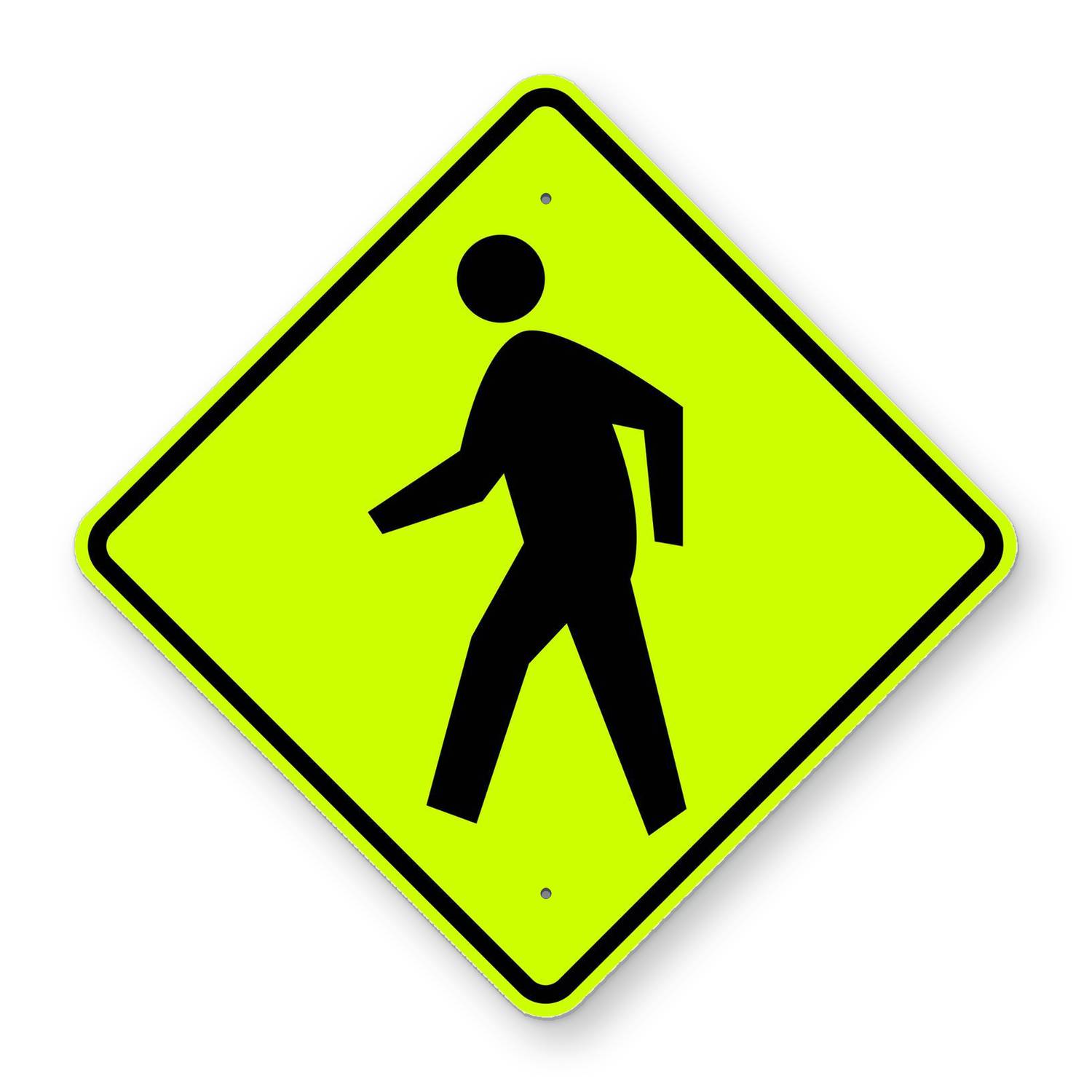






Road Warning Signs
Road warning signs are the yellow diamond-shaped signs defined in the MUTCD W-series. They alert drivers to conditions ahead: curves and turns, intersections, pedestrian and bicycle crossings, lane transitions, road surface conditions, and advisory speeds. Warning signs are not regulatory; they advise drivers to adjust speed or position rather than impose a legal requirement. Every sign in this collection is manufactured to MUTCD specifications for shape, color, legend, and reflectivity.
Choosing the right size
The MUTCD specifies 30" x 30" for conventional roads and 36" x 36" up to 48" x 48" for freeways and expressways. A 24" x 24" minimum is allowed on low-speed, low-volume roads posted 25 mph or less. Advisory and supplemental plaques mount below the parent sign, with 24" x 18" the standard plaque size on conventional roads. Most municipalities order 30" x 30" for two-lane roads and 36" x 36" for multi-lane or higher-speed applications.
Reflective sheeting options
All four sheeting options exceed the MUTCD minimum for permanent warning signs. High Intensity Prismatic (HIP, ASTM Type IV) is the standard for conventional roads. Diamond Grade DG3 (Type XI) returns nearly twice the light for high-speed roads and poorly lit locations. Diamond Grade Fluorescent Yellow adds stronger visibility at dawn, dusk, and in overcast conditions. Diamond Grade Fluorescent Yellow Green is the MUTCD-required color for non-motorized traffic warnings such as pedestrian, bicycle, and school signs, and is not interchangeable with standard yellow.
When to replace warning signs
Replace any sign that is faded, cracked, peeling, bent, or no longer reflective at night. The FHWA recommends inspecting warning signs at least once a year, including a nighttime retroreflectivity check, and keeping a replacement on hand so a damaged sign location is never left empty.