
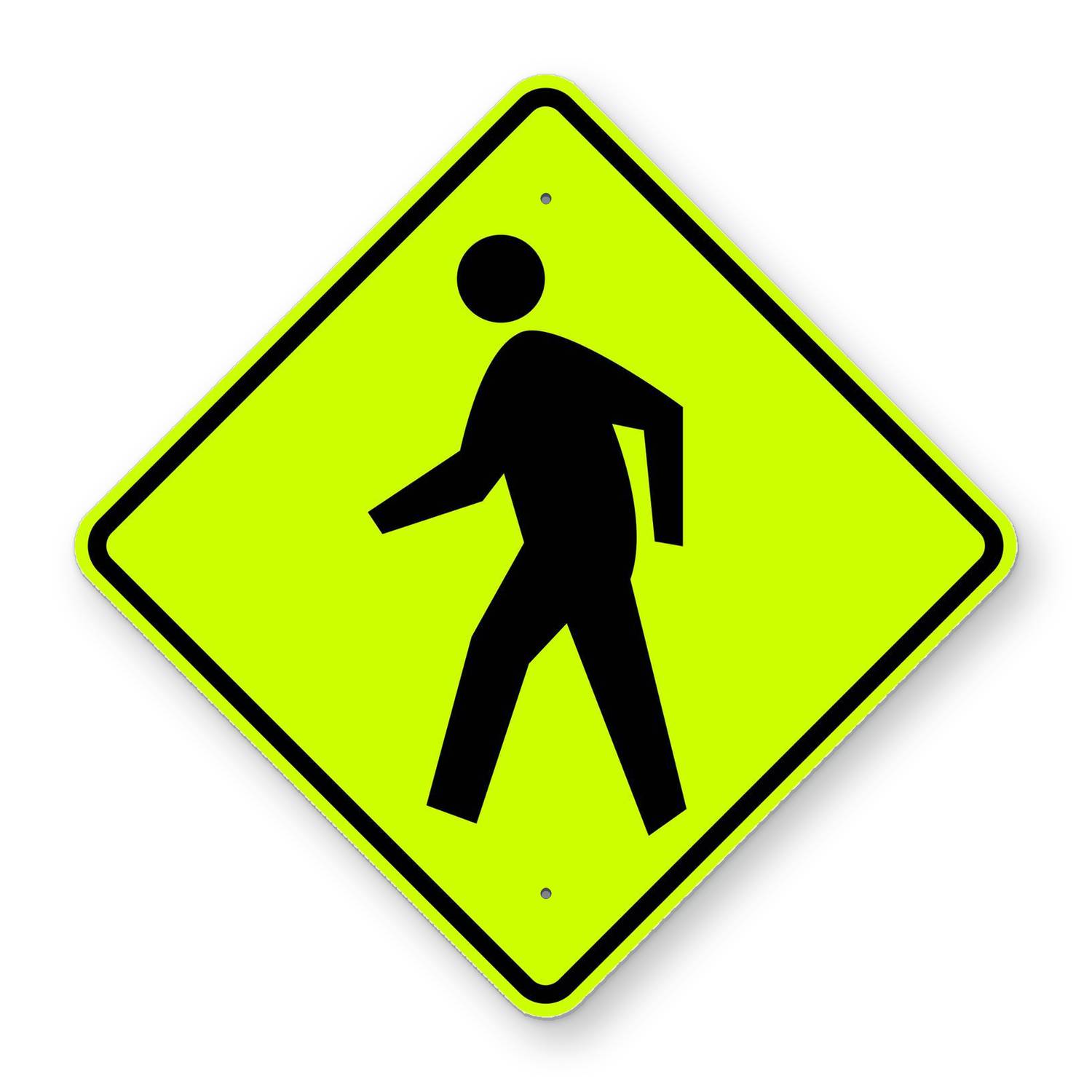
Fluorescent yellow-green signs warn drivers where people are most likely to be in or near the road: school zones, pedestrian and bicycle crossings, and playgrounds. The MUTCD reserves this color for those warnings, and we carry the S1-1 School Crossing, S4-5 School Speed Limit Ahead, W11-2 Pedestrian Crossing, W11-1 Bicycle, and W15-1 Playground signs with matching plaques on our .080" reflective aluminum.
-
Handicap Crossing Sign W11-9
.080" aluminum -
Next 1 Mile Plaque W7-3aP
.080" aluminum -
500 Feet Distance Plaque W16-2P
.080" aluminum -
Trail X-ing Plaque W11-15P
.080" aluminum -
School Plaque S4-3P
.080" aluminum -
School Crossing Sign S1-1
.080" aluminum -
School Bus Turn Ahead Sign S3-2
.080" aluminum -
School Bus Stop Ahead Sign S3-1
.080" aluminum






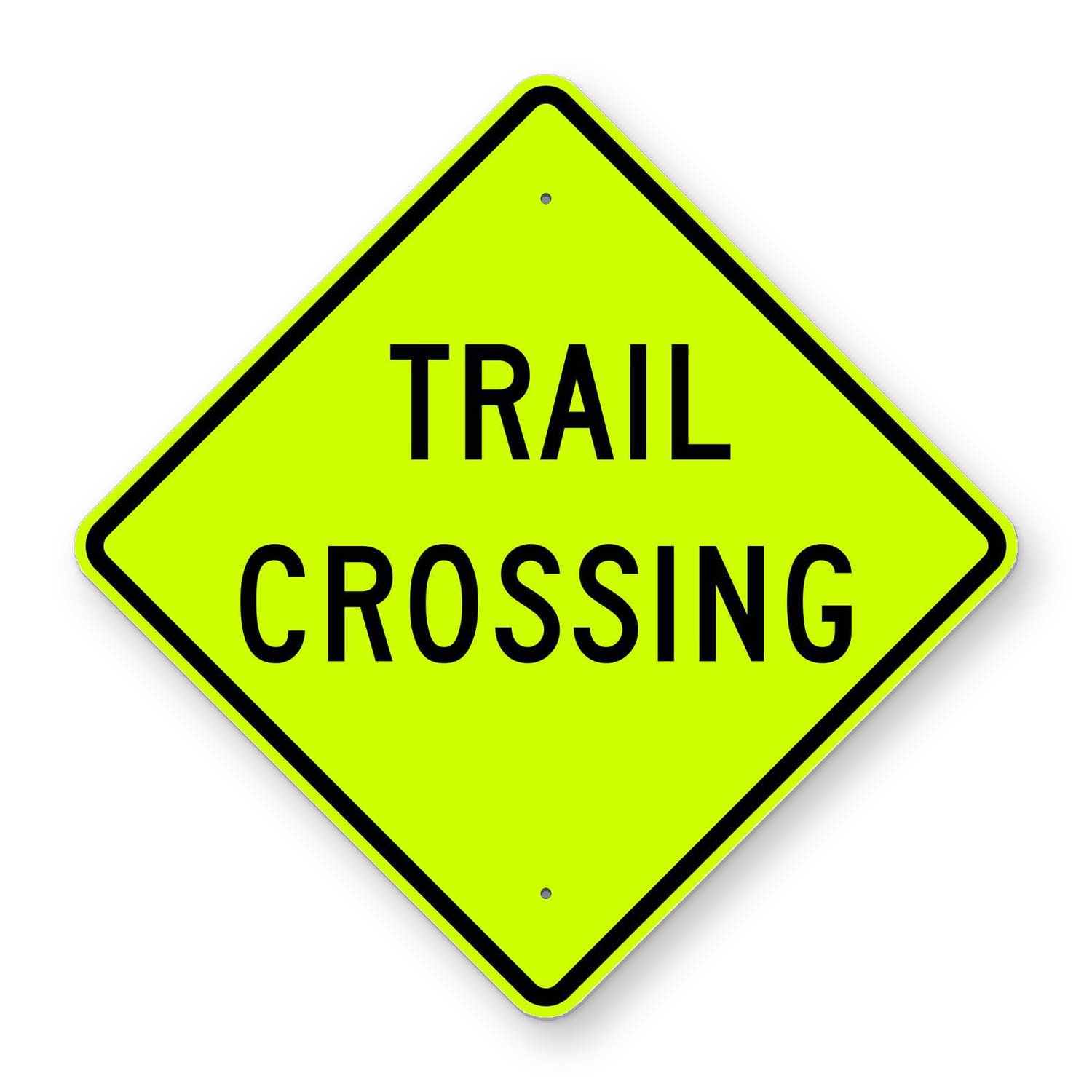


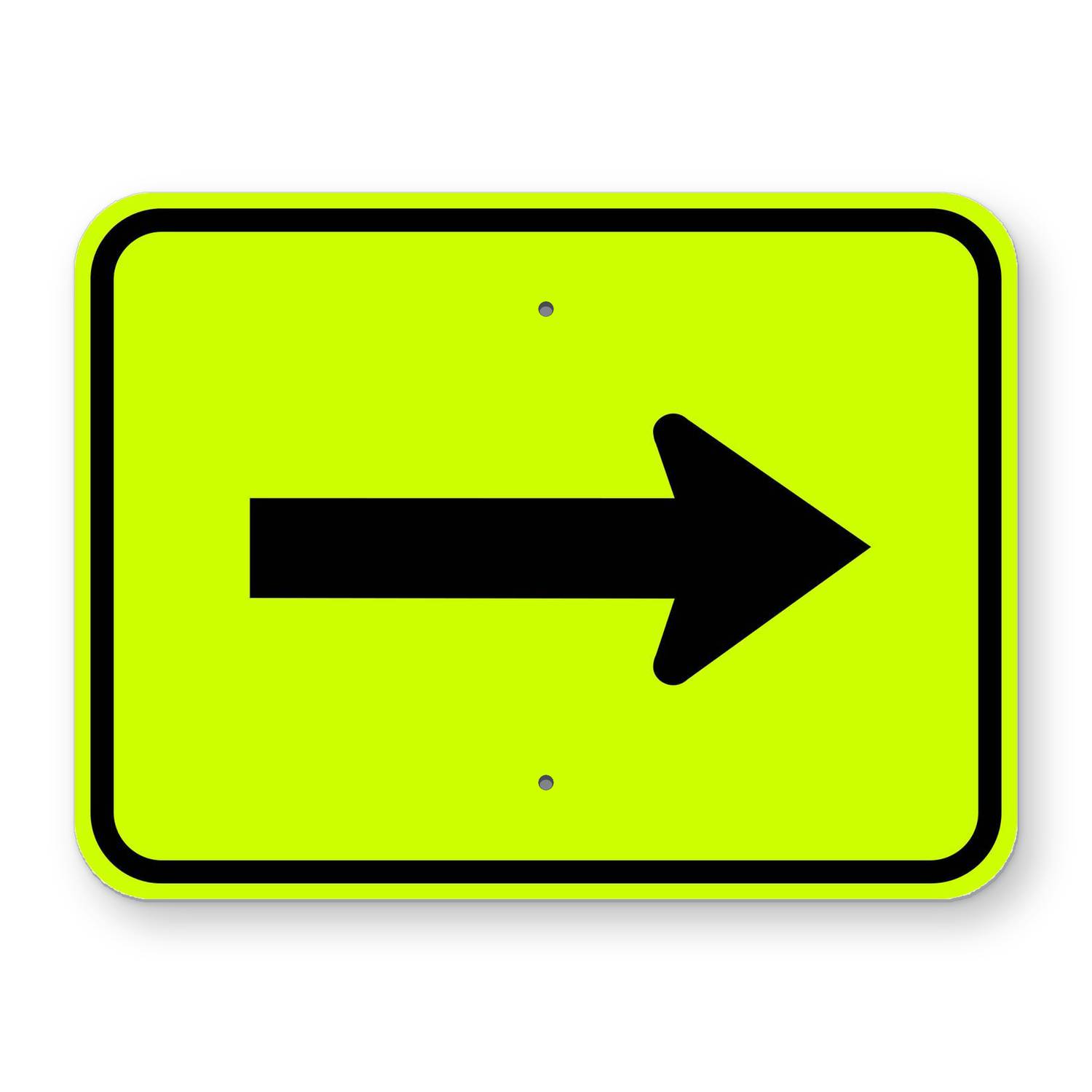


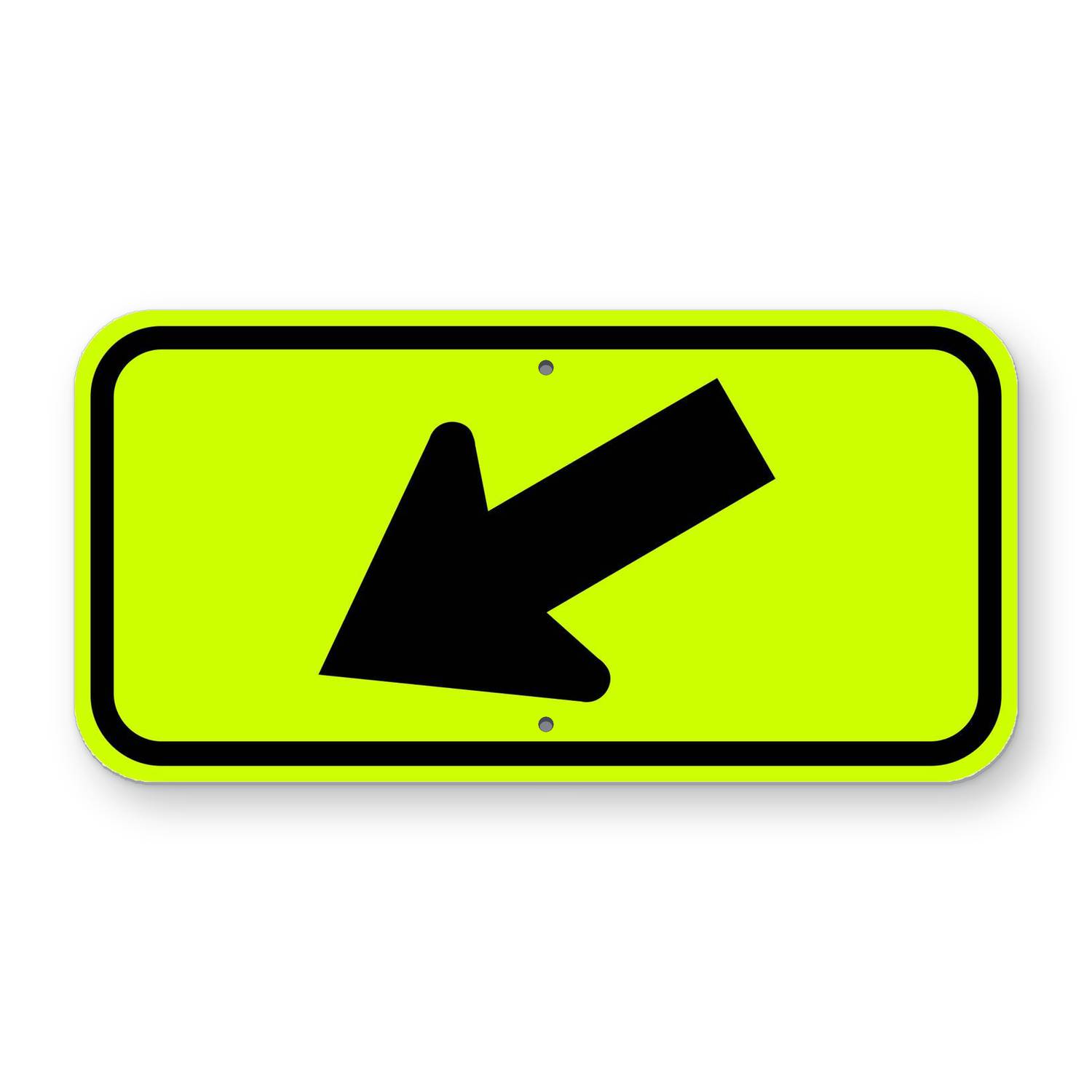
What Does a Fluorescent Yellow-Green Sign Mean?
Fluorescent yellow-green is the MUTCD warning color for people. Plain yellow warns about the road: a curve, a dip, a deer crossing. Fluorescent yellow-green warns that pedestrians, children, or bicyclists may be in the road ahead. The color was added because it is the most visible color in daylight, dawn, dusk, and rain, exactly the hours when children walk to school and commuters ride home. Since the 2009 MUTCD every school warning sign must use it. Pedestrian, bicycle, and playground warning signs may use it, and most agencies now do.
The official MUTCD name is fluorescent yellow-green. Buyers also call these lime-green or neon-green road signs, but they are not the same as the green guide signs that carry street names and route directions.
Every sign in this category is the same design as its plain-yellow version. Only the background changes. That means the shapes, symbols, sizes, and placement rules you already know still apply.
Which Yellow-Green Sign Do You Need?
Scroll sideways to view the full table on smaller screens.
| Situation | Signs to use | MUTCD codes | Yellow-green required? |
|---|---|---|---|
| School zone begins or a school crosswalk is ahead | School Signs: School Crossing pentagon, School plaque, Ahead and arrow plaques | S1-1, S4-3P, W16-9P, W16-7P | Yes |
| A lower school speed limit is coming up | School Speed Limit Signs: School Speed Limit Ahead, School Speed Zone Ahead | S4-5, S4-5a | Yes |
| School buses stop or turn on the road | School Bus Stop Ahead, School Bus Turn Ahead | S3-1, S3-2 | Yes |
| Pedestrians cross at or near this point | Pedestrian Signs: Pedestrian Crossing, Handicap Crossing, State Law Stop for Pedestrians | W11-2, W11-9, R1-6a | Optional, recommended |
| Bicycles or a trail cross the road | Bicycle Signs: Bicycle, Bicycle and Pedestrian Crossing, Trail Crossing, Trail X-ing plaque | W11-1, W11-15, W11-15A, W11-15P | Optional, recommended |
| A playground is next to the road | Children at Play Signs: Playground | W15-1 | Optional |
| The sign above needs a distance or direction | Supplemental Plaques and Distance Road Signs in matching yellow-green | W16-2P, W16-5P, W16-6P, W16-7P, W7-3aP | Must match the sign above |
Plaques must match. If the diamond or pentagon is fluorescent yellow-green, the Ahead, distance, or arrow plaque under it must be fluorescent yellow-green too. Mixing a plain-yellow plaque under a yellow-green sign is one of the most common inspection failures we hear about.
Use It Consistently
The MUTCD asks that fluorescent yellow-green be used systematically. If one crosswalk on a street gets a yellow-green Pedestrian Crossing sign, the other crosswalks in that area should too, so drivers do not read the plain-yellow ones as less important. When you order for a school zone, order the full set: the S1-1 pentagon with its Ahead plaque in advance, the S1-1 with a diagonal arrow plaque at the crosswalk, the S4-5 or S4-5a speed sign, and any School Bus signs the route needs.
What Size Do I Need?
- School Crossing pentagon S1-1: 36" x 36" on conventional roads, 48" x 48" on multi-lane roads and expressways.
- School Speed Limit Ahead S4-5 and S4-5a: 36" x 48" on conventional roads, 48" x 60" on expressways.
- Pedestrian, bicycle, and playground diamonds: 30" x 30" on conventional roads, 36" x 36" on multi-lane roads, 48" x 48" on freeways.
- Plaques: 24" x 18" or 24" x 24" under a 30" or 36" sign, 30" x 24" under a 48" sign.
If you are replacing a sign, measure the old one and match its code. Our product pages list every size we carry for each sign.
Reflective Sheeting for Yellow-Green Signs
Fluorescent yellow-green is a Diamond Grade DG3 product. The fluorescence is built into the prismatic sheeting, so there is no High Intensity Prismatic version of a fluorescent color. Our yellow-green signs ship on Diamond Grade Fluorescent Yellow-Green sheeting, which meets ASTM Type XI and the MUTCD retroreflectivity minimums for warning signs with room to spare. If your spec calls for plain yellow HIP, order the same sign from our Yellow Signs category.
Why Buy Yellow-Green Signs from RoadSigns.com
Our signs are made in the USA on .080" aluminum, the same gauge state DOTs specify, with prismatic sheeting applied to the exact MUTCD legend, border, and color layout. Every size and sheeting combination is priced on the product page, so you can order one replacement sign or a full set without waiting on a quote. Quantity pricing applies automatically when you order the same sign in multiples. We are a registered federal supplier and ship nationwide from the factory. If the sign you need is not in this category, email us and we will make it.
Yellow-Green Sign FAQ
Is fluorescent yellow-green required for school signs?
Yes. Since the 2009 MUTCD, school warning signs, including the S1-1 School Crossing pentagon, the S4-5 School Speed Limit Ahead sign, and the School plaque, must have a fluorescent yellow-green background. Agencies had until 2018 to replace the older yellow ones.
Can I use yellow-green for a pedestrian sign that is not at a school?
Yes. The MUTCD allows fluorescent yellow-green for any pedestrian, bicycle, or playground warning sign. It is optional, but once you use it in an area you should use it for all the similar signs in that area.
Why does a yellow-green sign cost more than the yellow one?
The color is only made in Diamond Grade sheeting, which is a higher grade than the High Intensity Prismatic used on a standard yellow sign. You are paying for Type XI retroreflectivity as well as the color.
Will the color fade?
All fluorescent colors fade faster than standard colors, which is why the sheeting carries a shorter warranty than plain yellow. In practice a yellow-green sign still outperforms a new plain-yellow sign for most of its life because it starts so much brighter. Inspect at night once a year and replace when it no longer stands out from its neighbors.