
Warn drivers before they reach a hazard. Diamond signs are the MUTCD standard for advance warning, used across road, work zone, and school applications.
-
No Outlet Warning Sign W14-2
.080" aluminum -
Handicap Crossing Sign W11-9
.080" aluminum -
Deer Crossing Sign W11-3
.080" aluminum -
Loose Gravel Warning Sign W8-7
.080" aluminum -
Road Narrows Warning Sign W5-1
.080" aluminum -
Signal Ahead Warning Sign W3-3
.080" aluminum


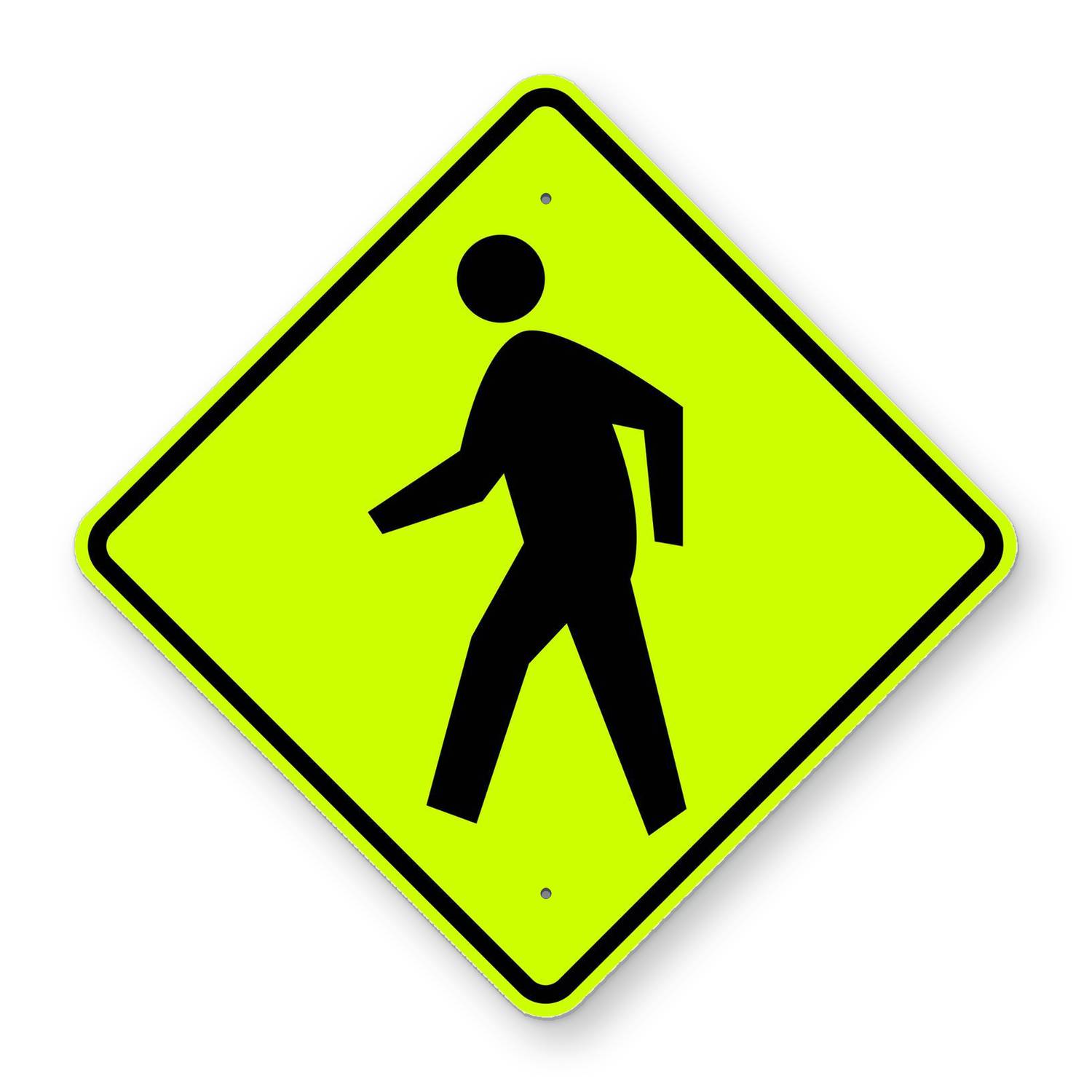


Diamond Road Signs Buying Guide
Diamond road signs are primarily used to warn drivers about conditions they may encounter ahead. They can identify curves, intersections, changing roadway conditions, pedestrian activity, lane changes, construction work, and other situations where drivers may need additional time to react.
Most standard warning signs use the familiar diamond shape, but the color, symbol, wording, and MUTCD code determine the specific message. Use the guide below to choose the right type, size, color, and reflective sheeting for your application.
What Do Diamond Road Signs Mean?
A diamond-shaped road sign generally means warning. Unlike regulatory signs that tell drivers what they must or must not do, warning signs alert road users to a condition that may require extra attention, a reduction in speed, or a change in driving behavior.
Common examples include curve signs, intersection warnings, pedestrian crossings, merging traffic, lane endings, low clearance warnings, and advance warnings for traffic signals or stop signs.
What Color Are Diamond Road Signs?
The background color helps identify the type of warning.
- Yellow: The standard color for most permanent roadway warning signs, including curves, intersections, merges, roadway conditions, and many pedestrian or bicycle warnings.
- Orange: Used for temporary traffic control and work-zone warnings such as Road Work, Lane Closed, Flagger, and construction-related conditions.
- Fluorescent yellow-green: Used for school-related warning signs and commonly used for pedestrian, bicycle, and playground warnings where increased conspicuity is desired.
The legend and border are normally black on these warning-sign backgrounds. Always select the color that corresponds with the specific sign and application rather than choosing a color based on appearance alone.
Common Types of Diamond Road Signs
Diamond warning signs cover a wide range of roadway conditions. Some of the most common groups include:
- Curve and alignment signs: Warn of turns, curves, winding roads, reverse curves, and other changes in roadway alignment.
- Intersection signs: Identify crossroads, side roads, T-intersections, Y-intersections, and other approaching intersection configurations.
- Traffic condition signs: Warn of merging traffic, added lanes, lane endings, two-way traffic, divided highways, or signals ahead.
- Road condition signs: Identify conditions such as bumps, dips, narrow roads, low shoulders, slippery pavement, or low clearance.
- Pedestrian and bicycle signs: Alert drivers to pedestrian crossings, bicycle activity, playgrounds, and other non-vehicular road users.
- Construction signs: Orange diamond signs warn of road work, lane closures, flaggers, utility work, shoulder work, and other temporary traffic-control conditions.
How Do I Choose the Right Diamond Sign Size?
The correct size depends on the specific MUTCD sign, roadway type, traffic speed, and installation location. Many warning signs are available in several sizes because a sign that works on a low-speed local road may not provide enough visibility on a wider or faster roadway.
30" x 30", 36" x 36", and 48" x 48" are common sizes for many diamond warning signs, but they are not interchangeable for every application. The MUTCD provides individual size requirements for each warning-sign code.
As a general requirement, diamond-shaped warning signs facing traffic on a multi-lane conventional road with a posted speed above 35 mph must generally be at least 36" x 36". Larger sizes are used for many expressway, freeway, and higher-visibility applications.
For a public roadway, select the size listed for the specific MUTCD code and roadway condition. For private roads, parking areas, campuses, and facilities, the appropriate size may depend on viewing distance, operating speed, and site requirements.
Yellow or Orange Diamond Sign?
Use yellow for permanent warning conditions and orange when the warning relates to temporary traffic control or road work.
For example, a permanent Merge sign is normally yellow, while a temporary lane-closure warning within a construction zone is orange. Work-zone warning signs generally retain the same diamond shape but use an orange background so drivers can quickly distinguish temporary conditions from permanent roadway warnings.
Choose the Right Reflective Sheeting
Roadway warning signs need to remain visible at night as well as during the day. Reflective sheeting returns light from vehicle headlights toward the driver and helps the sign remain recognizable from a distance.
High Intensity Prismatic (HIP): A common choice for roadway warning signs and a strong standard option for many traffic applications.
Diamond Grade DG3: A higher-performing reflective sheeting option for applications where greater nighttime visibility is desired or required by the project specification.
Available sheeting options vary by product, so check the individual product page before ordering.
Custom Diamond Road Signs
Need a warning message that is not available as a standard sign? Custom diamond signs can be made with your own wording for private roads, facilities, campuses, industrial properties, parking areas, and other site-specific applications.
For signs installed on public roads, start with the applicable MUTCD sign and code whenever a standard sign already exists. A custom message should not be treated as MUTCD compliant simply because it uses a yellow diamond shape.
Material and Mounting
Most diamond road signs in this collection are made from .080" aluminum for long-term outdoor use. Product pages show the exact size, reflective sheeting, mounting-hole configuration, and other specifications available for each sign.
Diamond signs can be mounted to compatible U-channel, square, or round sign posts using the appropriate hardware. Sign posts and mounting hardware are generally sold separately. Shop compatible options in our Sign Posts collection.
Not Sure Which Diamond Sign You Need?
If you know the MUTCD code, use it to find the corresponding sign and available sizes. If you are replacing an existing sign, matching the code, dimensions, color, and reflective sheeting is a good starting point.
For custom legends, unusual sizes, larger projects, or signs that are not listed online, please request a quote or email support@roadsigns.com with your requirements.